
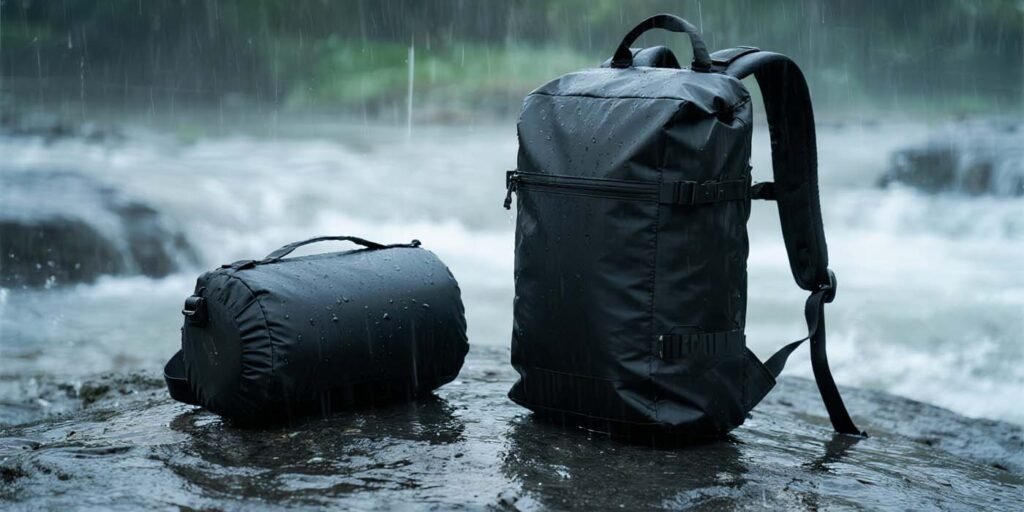
waterproof bags are designed to keep your gear dry in rain, water-crossings, and accidental splashes. Whether you need a commuter tote, a rugged dry bag for kayaking, or a laptop-safe waterproof sleeve, this guide explains what “waterproof” really means, the types of bags available, and nine top-category picks so you can buy confidently.
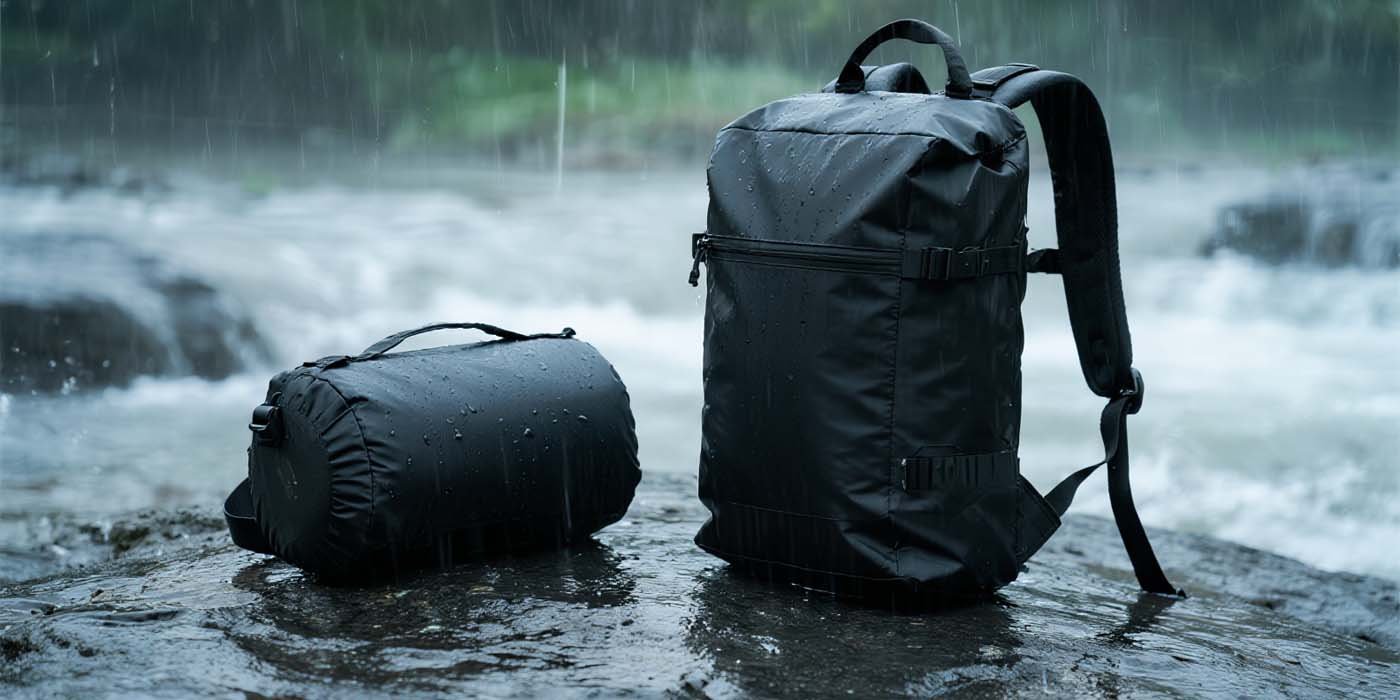
What “waterproof” actually means
Not all “waterproof” labels are equal. In outdoor gear terms, waterproof usually implies a fully sealed construction (taped seams, roll-top closures, welded fabric) that prevents water entry even in heavy rain — while water-resistant or water-repellent fabrics only shed light drizzle or splashes. For clarity, check for taped seams, roll-top closures, or IP ratings rather than just marketing words.
Common types of waterproof bags
- Dry bags (roll-top): Best for boating, rafting, and full submersion protection. Popular sizes range from small phone pouches to 40+ L duffels.
- Waterproof backpacks: Built with welded seams and waterproof zippers or storm flaps for hiking and bike commuting.
- Waterproof totes & laptop bags: Designed for commuters—often water-resistant or semi-waterproof; look for sealed compartments for electronics.
- Dry duffels & roll-top duffels: Ideal for travel and gear-hauling where full waterproofing is needed.
9 essential waterproof bag picks
- Roll-top dry bag (small): For phones, wallet, and small essentials on boat trips.
- Roll-top dry duffel (large): For overnight trips or wet-weather gear storage.
- Waterproof daypack: Hands-free option for rainy hikes or bike commutes.
- Waterproof laptop bag / sleeve: Padded, sealed compartment for devices.
- Waterproof tote with sealed pocket: Stylish commuter option with protected electronics pocket.
- Waterproof camera insert / cube: Protects camera bodies and lenses inside any bag.
- Waterproof crossbody pack: Quick-access, splash-proof option for city travel.
- Ultralight Dyneema dry bag (backpacking): Extremely light and fully waterproof for thru-hikes.
- Anti-theft waterproof travel pack: Combines hidden pockets and water protection for urban travel.
How to choose: checklist
- Level of exposure: Will your bag be submerged or just rained on? Choose true dry bags for submersion.
- Seam construction: Taped/welded seams vs sewn seams — taped/welded are needed for reliable waterproofing.
- Closure type: Roll-top is the gold standard for dry bags; waterproof zippers with storm flaps help for backpacks.
- Materials & weight: DCF/Dyneema offers ultralight strength for backpackers; PVC or TPU-coated nylon is common for duffels.
- Carry style & comfort: Padded straps, chest/waist belts, or tote handles depending on use.
- Device protection: Look for padded, sealed compartments for laptops and cameras if needed.
Quick comparison table
| Bag type | Best for | Waterproof level |
|---|---|---|
| Roll-top dry bag | Boating, rafting | Fully waterproof, submersion-ready |
| Waterproof backpack | Hiking, biking | High (if welded seams + waterproof zips) |
| Waterproof tote / commuter | City commute | Moderate → protects against rain; check sealed pockets |
| Ultralight DCF pack | Long-distance hiking | Fully waterproof + ultra light |
| Dry duffel | Travel & storage | Fully waterproof, heavy-duty |
(See REI’s dry bag selection for product choices and sizing guidance.)
Care, longevity & practical tips
- Test before trusting: Put a towel inside, close the bag, and spray or submerge briefly to confirm seals.
- Mind the seams and zippers: Fabric can be waterproof while a sewn seam or exposed zipper becomes the weak point—taped seams and roll-tops reduce that risk.
- Dry and store correctly: Air-dry fully and store uncompressed to avoid mold and material fatigue.
- Choose the right size: Smaller dry bags keep essentials compact; large duffels protect clothing and gear.
- For tech gear: Use a dedicated waterproof laptop sleeve inside the bag; many commuter “waterproof” totes are only water-resistant—inspect specs.
Where to research models & buy
Look for reputable outdoor retailers and test/review sites to compare materials and real-world performance. REI’s dry bag & waterproof packs pages list trusted brands and types. For ultralight options and recent tests, specialist blogs review Dyneema (DCF) packs and the newest 2025 models.